

Porcelain stoneware vs. sintered stone: visually similar, structurally distinct
August 2025
Porcelain stoneware vs. sintered stone: visually similar, structurally distinct
At first glance, they may look similar. But beyond appearances, porcelain stoneware and sintered stone are fundamentally different materials and understanding those differences is essential for making informed decisions based on the specific needs of each project.
Both are strong, durable, and aesthetically versatile. However, they differ significantly in composition, manufacturing methods, and technical performance.

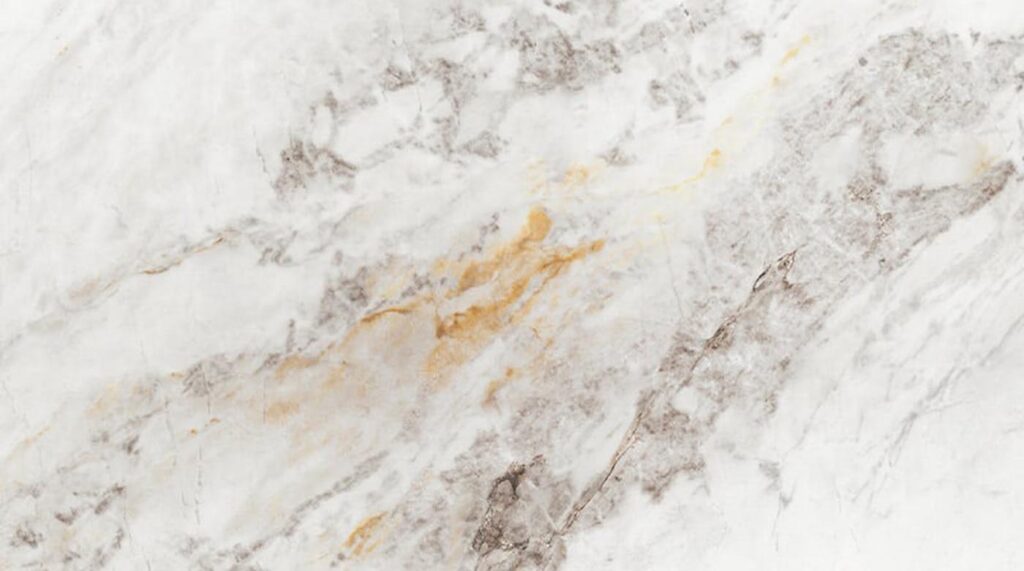
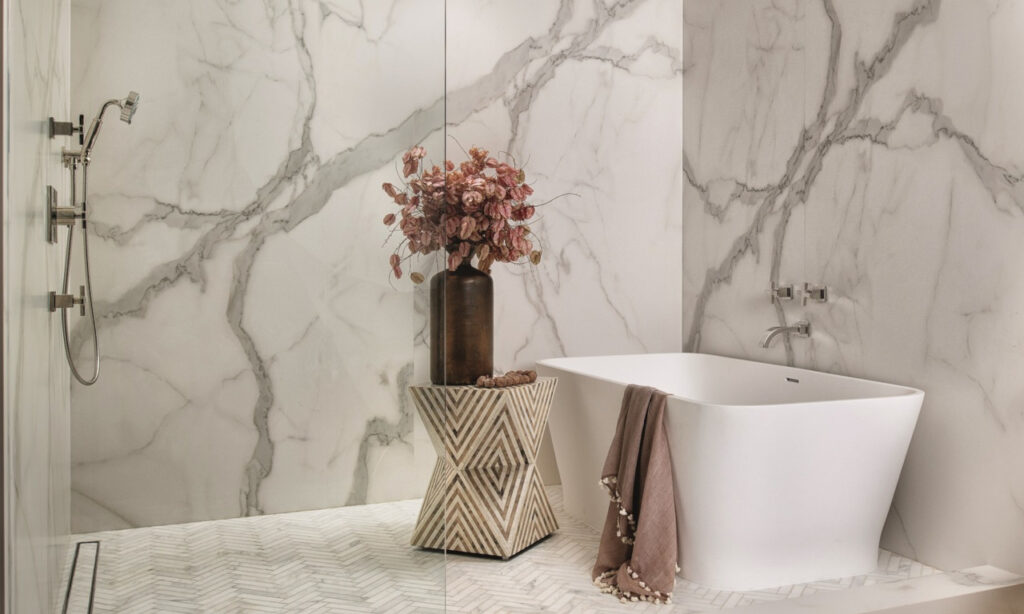


Porcelain stoneware is a ceramic material made by pressing refined clays, quartz, feldspar, and other minerals, followed by firing at high temperatures (between 1200 and 1300 °C). It is valued for its low water absorption, good mechanical resistance, and versatility, and is widely used in both interior and exterior applications. Still, it has limitations in terms of available formats, thicknesses, and performance under more demanding conditions.
Sintered stone, on the other hand, is a next-generation material. It is created by compacting natural minerals—such as quartz, feldspar, clays, silicas, and pigments—under extreme heat and pressure. This process, known as sintering, replicates in the lab what happens naturally over thousands of years in the formation of stone. The result is an ultra-compact, non-porous, high-performance surface.
Key advantages of sintered stone include:
-
Large-format surfaces, with minimal thickness starting at just 3 mm
-
High thermal, chemical, and mechanical resistance
-
Dimensional stability
-
Near-zero porosity — prevents staining and moisture absorption
-
Long-lasting durability, even in outdoor or high-traffic environments
Techlam: innovation with technical and environmental awareness
At Grupo Galrão, we have chosen to work with Techlam, an international benchmark in sintered stone that combines technical excellence with a strong commitment to safety and sustainability.
One of Techlam’s key differentiators is its reduced crystalline silica content. Present in many mineral-based materials, crystalline silica can pose health risks when inhaled as fine dust—particularly during cutting and handling. Techlam has developed a low-silica formulation that significantly reduces these risks without compromising strength, durability, or aesthetics.
For us, proper specification is more than a technical matter, it is a responsibility. That’s why we take an informed, thoughtful, and conscious approach.
Techlam sintered stone represents this new generation of surfaces: visually refined, technically resilient, and designed to protect both those who work with them and those who live with them.